
When the River Burns:
The Lie of Coverage in a World Set on Fire

You want to talk about risk?
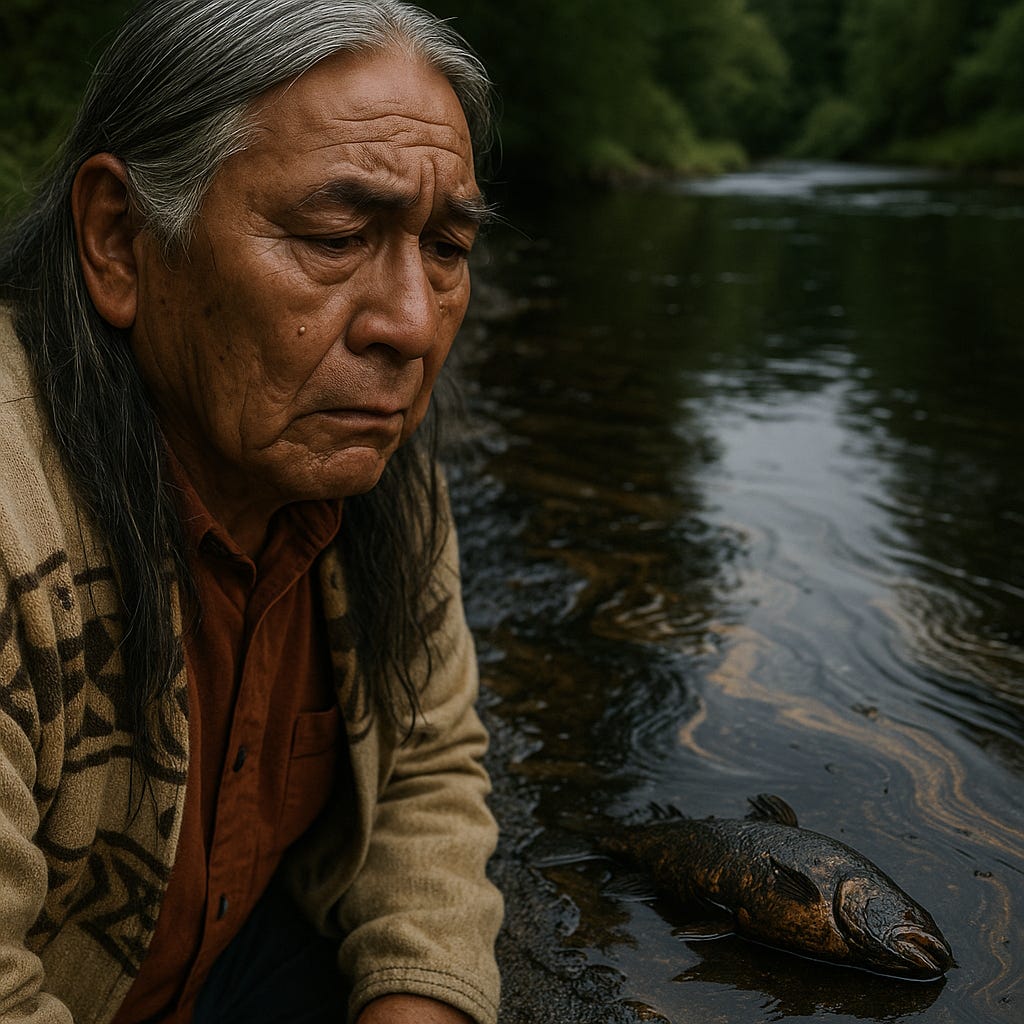
Then let’s talk about a truck flipped upside down in a sacred creek. Let’s talk about diesel and gasoline spewing into Indian Creek, fueling headlines, killing salmon, and threatening the very soul of a river the Lower Elwha Klallam Tribe fought decades to restore.
You think there's a policy for that?
Last Friday, a tanker truck crashed on U.S. 101 in Washington’s Olympic Peninsula and dumped poison into a pristine tributary. This wasn’t just a “spill.” This was a gut punch to the land, the people, the fish, and the future. And if you think some tidy little insurance payout will patch it all up, I’ve got a rusted-out claims form to sell you.
Let’s Count the Casualties
Start with the salmon. They just made it back after 100 years of dammed-up habitat and bureaucratic delays. Now they’re swimming through gasoline.
Add the local tribes, who rely on these waters for tradition, food, and identity. They’ve been displaced before (remember Exxon Valdez?), and now they’re watching history threaten to repeat itself.
Layer in the city of Port Angeles, which had to shut down its water treatment facility. Think about that. A modern American city temporarily out of clean water because someone’s truck flipped and dumped fuel in the wrong place.
And what about the trucker? The transport company? The fuel distributor? The Department of Transportation? The state? The feds?
So many stakeholders. So many liabilities. So many ways to point fingers. And one giant, unanswered question:
Who pays, and how much is a river really worth?
Insurance Can’t Fix This
Let me tell you how this game works.
Insurance companies love accidents like this. Not because of the damage, but because of the ambiguity. It gives them space to maneuver. Delay. Litigate. Deny.
They’ll slice this disaster into a dozen pieces:
Property damage claim here.
Environmental remediation claim there.
Civil liability claims from tribal attorneys over here.
Maybe some class action suits for good measure.
And every time you try to bring it all together under one banner of justice, they’ll say: “Not our department.”
They’ll file motions to dismiss. Argue about jurisdiction. Demand scientific proof about fish kills. Offer pennies while the water table turns toxic.
And if the tribal leaders or city officials push back? Guess what the insurance industry does?
They wait. Because time is on their side. They’ve got lawyers on salary. You’ve got legal bills stacking up by the hour.
This Isn’t Just a Spill. It’s a System Failure.
It’s not just about the crash. It’s about what comes after, when those tasked with protecting people and places pass the buck.
This is what happens when a trillion-dollar industry is designed not to pay, but to stall. Designed not to protect the people, but the profits. Designed not to heal, but to litigate.
So when the headlines fade, and the salmon don’t come back, and the tribe is once again forced to move or fight, where’s the indemnity then?
I’m Jack Hapsburg. I’ve seen the aftermath. I’ve talked to the people who are still waiting for help decades after their “claim” was filed. And I’m telling you: until we stop letting insurance companies write the rules, stories like this will keep getting written.
Want to change the ending?
📍 Join us at Inssux.com.
Because no one should have to file a claim to reclaim their life.