
They Cut Costs: You Got the Bill
How Insurers Used AI to Get Lean — and Still Raised Your Premiums

By Jack D. Hapsburg | INSSUX Dispatch
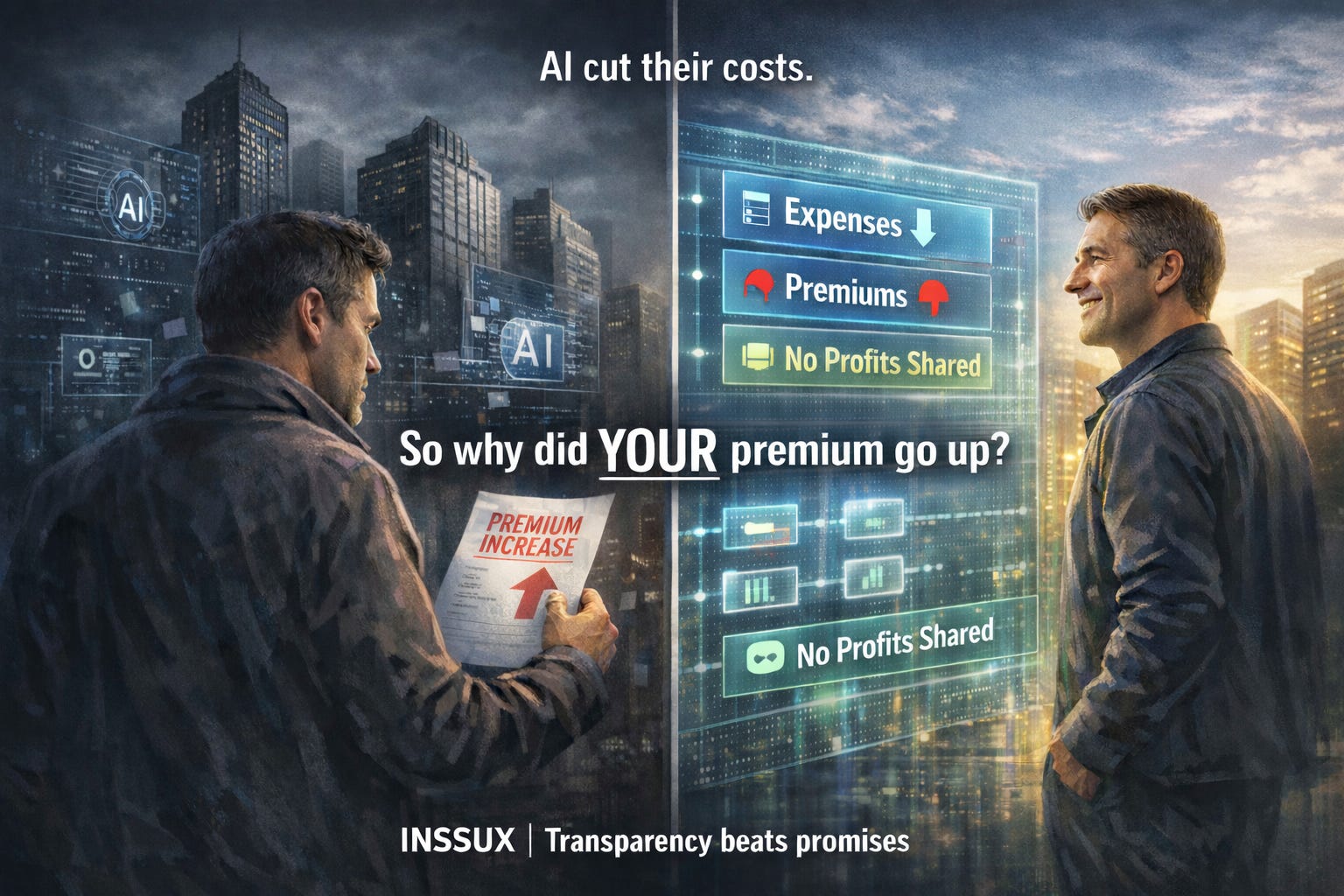
I was reading the latest reports from the ivory towers of AM Best and Morgan Stanley this morning, and frankly, I almost choked on my coffee.
Here is the headline news: Big Insurance is getting richer. Leaner. More “efficient.”
Let’s get one thing straight before the suits start clapping for themselves.
The insurance industry just quietly admitted something big.
Using AI, automation, and remote work, property & casualty insurers cut their operating expenses significantly over the last decade. That’s not gossip; that’s straight from the bean counters at AM Best and Wall Street analysts at Morgan Stanley.
They dropped their expense ratios from nearly 28% down to 25.3%.
Lower rent. Fewer humans. Smarter machines.
Morgan Stanley is practically drooling. They project this “efficiency” will pump an extra $9.3 billion into insurer profits by 2030.
So here’s the obvious question every policyholder should be asking:
Where’s my refund?
Spoiler Alert: You Didn’t Get One
If insurers are saving billions because robots are doing the filing and staff are working in pajamas, logic says premiums should go down.
Instead?
Premiums keep climbing like they’re chasing a summit flag. And somehow, magically, those “efficiency gains” never flow downhill to you.
That’s not an accident. That’s the system working exactly as designed.
The “Efficiency” Scam
Here is the quiet part no one announces on earnings calls: They aren’t using AI to help you.
They are utilizing this technology to cut corners on admin costs and—let’s be honest—probably automate the “NO” on your claims, too.
Expense ratios go down. Profit margins go up. Your premiums skyrocket.
It doesn’t make sense. Actually, it makes perfect sense for them. It just sucks for you.
Why Insurance DeFi Changes the Math
While the dinosaurs pat themselves on the back for shaving 2% off their expenses, some are building something that actually works for people.
The Insurance DeFi Initiative (IDefii.com) isn’t just about cutting costs. It’s about cutting costs on steroids.
They aren’t just replacing a secretary with a chatbot, but are overhauling the engine.
Take Actuarial Teams, for instance. These departments cost companies millions a year to guess when you’re going to crash your car.
They are replacing that entire layer with advanced AI modules. Yes, you have a human or two at the head,someone truly brilliant to steer the ship. But the heavy lifting? The data crunching? That’s AI agents.
Brilliant minds. Zero bloat.
From Policyholder to Participant
In the old world, the insurance company’s books are a black box. In our world—built on Web3, Web4, and the Blockchain—the books are wide open.
Total transparency. You see the expenses. You see the claims. You see the oversight.
And because they run a lean, mean, trustworthy machine, they intend to generate a surplus.
In Jack Hapsburg’s opinion, that surplus doesn’t buy a CEO a new yacht. It goes back to you.
Dividends. Real cash back. Or, you utilize that dividend to cut the cost of your insurance. In some instances, the efficiency of this machine could pay your entire premium.
The only catch is… it’s still under development. Yet some brilliant minds are developing it.
Jack’s Bottom Line
The technology exists to bring operating costs down. The difference is, they want to keep the change. IDefii wants to give it back.
AI shouldn’t just make insurance profitable. It should make it fair.
Next up:
We’ll show you how the Ripoff Detector flags exactly where those AI-driven denials and margin padding hide inside your policy, in plain English.
Until then:
Stay sharp. Stay curious. And don’t confuse innovation with honesty.
Join the Telegram Rebels: https://t.me/inssux
#makethempay #inssux #insurancejustic
e