Insurers Left on the Sidelines in Albany Diocese Bankruptcy
Why a federal judge ruled that insurers can’t contest claims—at least not yet

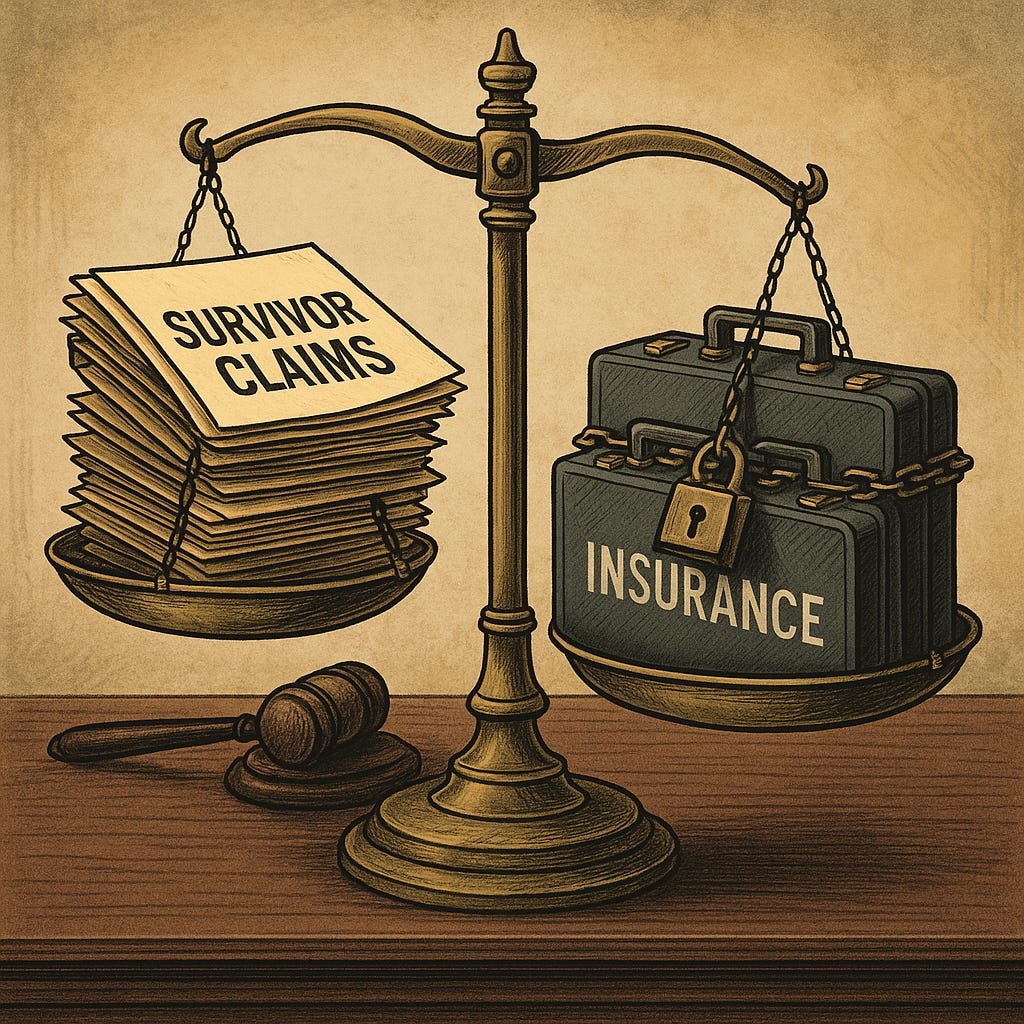
When survivors of clergy abuse bring their claims forward, the bankruptcy process becomes a battlefield over who will pay and when. This past week, that battlefield got a sharp ruling.
U.S. Bankruptcy Judge Robert E. Littlefield, Jr. handed down a decision in the Chapter 11 case of the Roman Catholic Diocese of Albany. The ruling: insurance companies that have not accepted responsibility for paying abuse claims currently have no standing to object to those claims.
What This Means
Insurers, specifically London Market Insurers (LMI) and The Hartford, moved to object to around 50 claims by survivors. Their reasoning? They argued they had the right to contest these claims even though they haven’t agreed to cover them.
The judge disagreed. He noted that a “party in interest” in bankruptcy is defined as someone with a direct financial stake. Since the insurers have denied liability and haven’t accepted responsibility, they aren’t financially exposed yet. In plain terms: no skin in the game, no seat at the table.
Judge Littlefield leaned on the Supreme Court’s recent Truck Insurance Exchange v. Kaiser Gypsum decision. In that case, the insurer was on the hook for most of the liability, which gave it standing. But in Albany, no reorganization plan has even been proposed yet, and the insurers haven’t accepted responsibility.
The Larger Picture
The Diocese of Albany filed for bankruptcy in 2023 as it faced hundreds of lawsuits from survivors. This ruling doesn’t erase those claims, nor does it finalize who will pay. It simply puts insurers on notice: until you formally commit to covering claims, you can’t block survivors from moving forward.
The judge left the door open. If and when insurers assume financial responsibility, they could return with standing to object. But for now, survivors’ claims remain in play without insurer interference.
Why It Matters
This case highlights a familiar dynamic: insurers trying to influence proceedings without admitting liability. It’s a tactical move, one that Judge Littlefield shut down. The message is clear: you can’t claim both “we owe nothing” and “we have the right to object.”
For survivors, this ruling is a step forward in what is always a long and painful legal journey. For insurers, it’s a warning shot.
* Survivors keep their claims alive.
* The Diocese still carries the weight of unresolved liability.
* Insurers remain on the sidelines—unless they step up and accept responsibility.
This ruling doesn’t resolve the crisis, but it sets the stage. The question remains: when the bill comes due, who’s paying?